Quick answer
Cats can eat a few plain human foods in small amounts, such as cooked chicken with no skin or bones, deboned cooked fish with no masala, and fully cooked plain egg. Keep these as occasional treats, not meals. Never give onion, garlic, grapes or raisins, chocolate, tea or coffee, alcohol, or anything sweetened with xylitol, and skip milk, raw meat and raw fish. If your cat eats something it shouldn't, call your vet straight away.
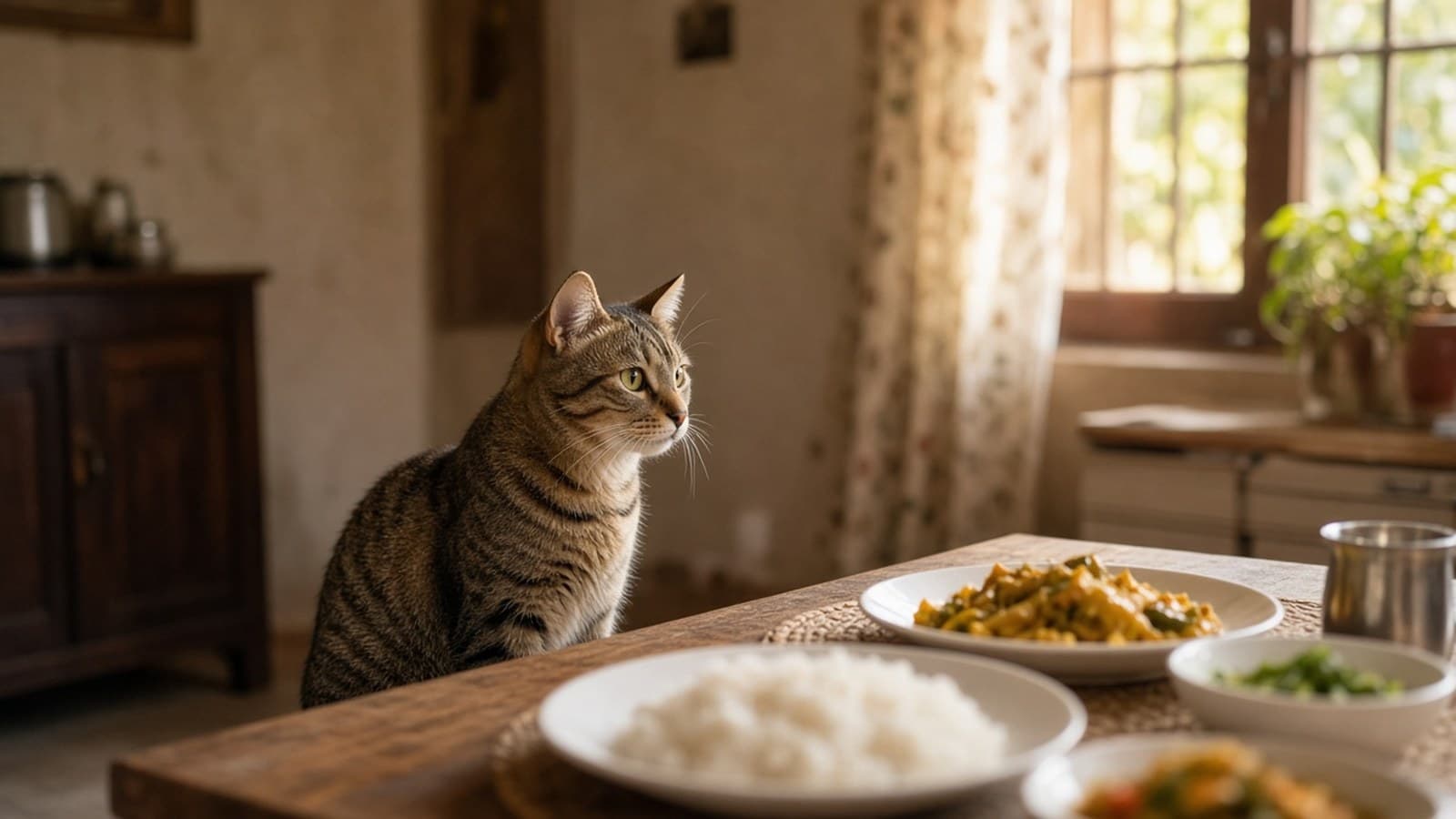
In many Bangladeshi homes the cat sits right next to the dinner table, and sharing a little bhaat and maach feels like the kind thing to do. Some human food is fine as an occasional treat, but some is genuinely dangerous, and our cooking adds risk: onion, garlic and spices go into almost every curry. This guide explains what human food cats can eat, what to keep off their plate, and how to give treats safely. It is general advice, not veterinary advice. If your cat has a health condition, is pregnant, very young or elderly, ask your vet before changing anything in its diet.
Why cats need cat food first
Cats are obligate carnivores. Cornell University's Feline Health Center explains that cats rely on nutrients found only in animal products, and that they need more than a dozen specific vitamins, minerals, fatty acids and amino acids, such as taurine, to stay healthy. A food labelled "complete and balanced" is formulated to cover those needs on its own.
A plate of rice with fish curry might fill a cat's stomach, but it is very unlikely to be complete and balanced. If you want to feed home-cooked meals as the main diet, ask your vet or a veterinary nutritionist to help plan a recipe.
So your cat's main diet should come from a complete cat food, dry, wet or both, with human food as a small, occasional extra. If you are unsure which type to choose, our wet vs dry cat food guide and our cat food buying guide explain the options.
Human foods cats can eat in small amounts
The foods below are commonly considered safe for healthy adult cats when they are cooked, plain and given in small pieces. "Plain" matters most: no salt, no oil-heavy frying, no onion, no garlic and no masala.
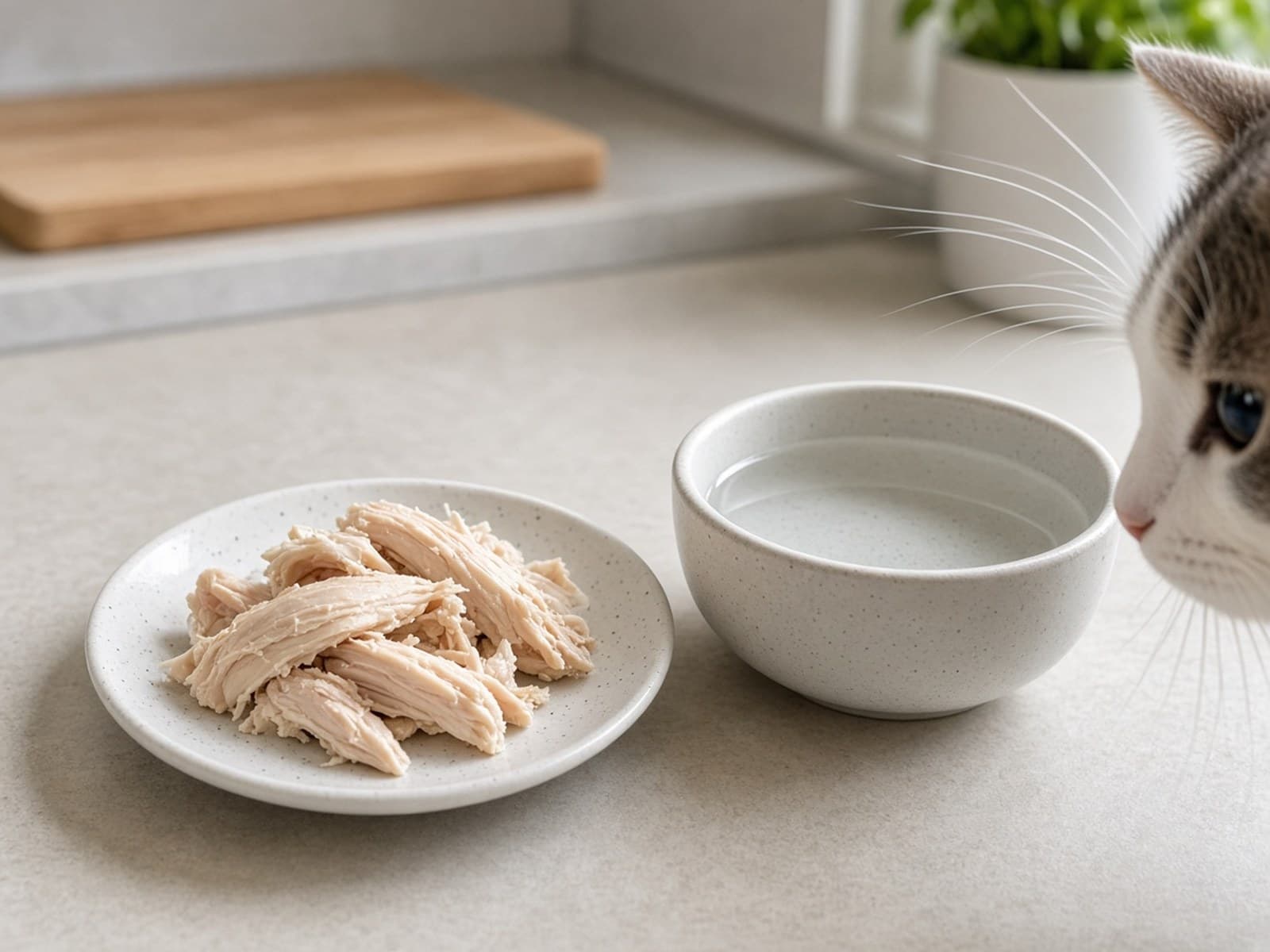
Plain cooked chicken
Boiled or steamed chicken breast, with the skin and every bone removed, is one of the easiest treats to share. Chicken from a curry, roast or biryani is not the same thing, because it is usually cooked with onion, garlic and spices.
Cooked fish with the bones removed
A small piece of plain steamed or boiled fish is fine as a treat if you remove all the bones first. Small, fine bones like those in ilish and many river fish are easy to miss, so pick through carefully. Do not share fish that has been cooked in curry, fried with masala or heavily salted, as with dried fish (shutki).
Fully cooked egg
A little plain, fully cooked egg, boiled or scrambled without butter, salt or spices, can be an occasional treat. Avoid raw or runny egg. PetMD notes that raw eggs, like raw meat and fish, carry a risk of bacteria such as Salmonella and E. coli.
A small amount of plain rice or pumpkin
Plain cooked rice or plain cooked pumpkin is not toxic, and many cats will nibble a spoonful. Neither is something a cat needs, since cats are built to eat animal protein, so keep these to a taste rather than a meal. Rice should never become the bulk of your cat's bowl.
Water, always
Fresh, clean water is the one "human" food your cat should have all day. Cornell recommends that cats have access to clean, fresh water at all times. Change it daily, especially in hot weather.
Human foods cats should never eat
These foods appear on the toxic lists of the ASPCA Animal Poison Control Center and Cornell's Feline Health Center. Keep them out of your cat's reach completely, not just off its plate.
Onion, garlic and chives
Onion, garlic and chives belong to the allium family. According to the ASPCA, they can cause stomach irritation and damage red blood cells, which can lead to anaemia, and cats are more susceptible than dogs. This is the biggest risk in a Bangladeshi kitchen, because onion and garlic, as paste or powder, are in most curries, bhuna, biryani and khichuri.
Grapes and raisins
The ASPCA warns that grapes and raisins can cause kidney failure in pets, and Cornell lists both as toxic for cats. Watch out for raisins (kishmish) hidden in polao, semai, firni and cakes during Eid and weddings.
Chocolate, tea and coffee
Chocolate, coffee and caffeine contain methylxanthines. The ASPCA says these can cause vomiting, diarrhoea, hyperactivity, an abnormal heart rhythm, tremors, seizures and even death, and that darker chocolate is the most dangerous. Do not let your cat lick a cup of cha or coffee.
Alcohol and raw dough
Alcohol can cause serious poisoning, and the ASPCA warns that raw yeast dough can expand in the stomach and produce alcohol as it ferments.
Xylitol
Xylitol is a sweetener found in some sugar-free chewing gum, sweets, baked goods and toothpaste. Cornell lists anything containing xylitol as toxic for cats. Never give your cat sugar-free products.
Foods that are risky, not just "a bit unhealthy"
Some foods are not poisons in the same way, but they cause enough problems that we suggest leaving them out.
Milk and dairy
Giving a cat a saucer of dudh is a long tradition, but Cornell says milk is not generally recommended because many cats are lactose-intolerant and can develop stomach problems from dairy. The same applies to doi, cheese and milk sweets such as rasgulla or sandesh, which are also very high in sugar. Weaned kittens and adult cats do not need milk; water is what they should drink.
Raw meat and raw fish
Cornell does not recommend raw meat as a food or a treat for cats, because it can carry toxoplasmosis and other infections that can affect both cats and people. Raw fish brings an extra problem: some raw fish contains thiaminase, an enzyme that breaks down thiamine (vitamin B1), and Cornell research notes that raw fish has caused thiamine deficiency in cats. Cook meat and fish before sharing it, or simply use cat treats instead.
Bones and fatty scraps
Cooked bones, especially chicken and fish bones, can splinter or get stuck in the mouth and throat. Fat trimmings and greasy food can upset the stomach, and PetMD notes that fat trimmings can cause pancreatitis in cats. Put them straight into a covered bin.
Canned tuna and other human fish products
A tiny taste of canned tuna is not usually a problem, but PetMD warns that feeding human tuna regularly can cause digestive upset and a painful condition called steatitis, and Cornell notes that some cats fed canned fish meant for humans have developed serious neurological problems. Tuna made into cat food is different, because it is formulated for cats. If your cat loves fish, choose a fish-based cat food such as Felix Tuna in Jelly or Whiskas Adult Ocean Fish instead.
How much human food is too much?
Cornell suggests a simple rule of thumb: treats of any kind should not make up more than 10 to 15 percent of a cat's daily calories. For most cats that means a few small pieces of chicken or fish, not a full portion. A few practical habits help:
- Keep pieces tiny. A piece about the size of your fingernail is plenty for a treat.
- Count it. If your cat had chicken today, give a little less of its usual food rather than adding on top, and keep an eye on its weight.
- Introduce one new food at a time. That way, if your cat's stomach is upset, you know the likely cause.
- Ask your vet first if your cat has kidney, urinary, digestive or weight problems, or is on a special diet. Even "safe" foods may not suit a cat on a prescribed diet.
Better treats than table scraps
If you enjoy giving your cat a little something at dinner time, cat treats and toppers are made for exactly that, and they avoid the onion, garlic and spice problem completely. Options in our food & treats aisle include:
- Lickable creamy treats, such as SmartHeart Creamy Treat Chicken, Me-O Creamy Treat Chicken and Liver and Wanpy Creamy Treats Tuna. Single-serve sachets make portioning easy.
- Meat broths, such as Wanpy Meat Broth Chicken. Wanpy describes it as a supplemental food to serve alone or pour over kibble.
- Crunchy treats, such as Friskies Party Mix Classic, a complementary treat that works well for training or play.
- Wet food as a "special meal". A pouch of complete and balanced wet food, such as SmartHeart Tuna with Chicken in Jelly, gives your cat fish and gravy with the nutrients it actually needs.
Remember that treats and broths are not complete meals either. The same 10 to 15 percent rule applies, so follow the feeding guide on each pack.
What to do if your cat eats something toxic
If your cat has eaten something on the "never" list:
- Stay calm and remove the food so your cat cannot eat more.
- Note what it ate, roughly how much and when. Keep the packet or a photo of the dish if you can.
- Call your vet straight away, even if your cat seems fine. Some problems, such as those caused by onion or garlic, can take time to show.
- Do not try home remedies or give medicine unless your vet tells you to.
- Watch for warning signs such as vomiting, diarrhoea, drooling, weakness, shaking, unusual breathing or hiding, and tell your vet about them.
The bottom line
A few plain pieces of cooked chicken, deboned fish or egg can be a safe treat. Keep the toxic foods above well away from your cat, skip milk and raw fish, and let a complete cat food do the real work of feeding. When in doubt, ask your vet first.