Quick answer
Persian cats need more hands-on care than most cats. Comb the coat every day with a metal comb, wipe the eyes and face daily, trim nails every few weeks, feed a complete food that suits a flat face and a long coat, keep the litter tray spotless, and keep your Persian cool during Bangladesh's hot months. Ask your vet about breed health checks such as kidney screening.
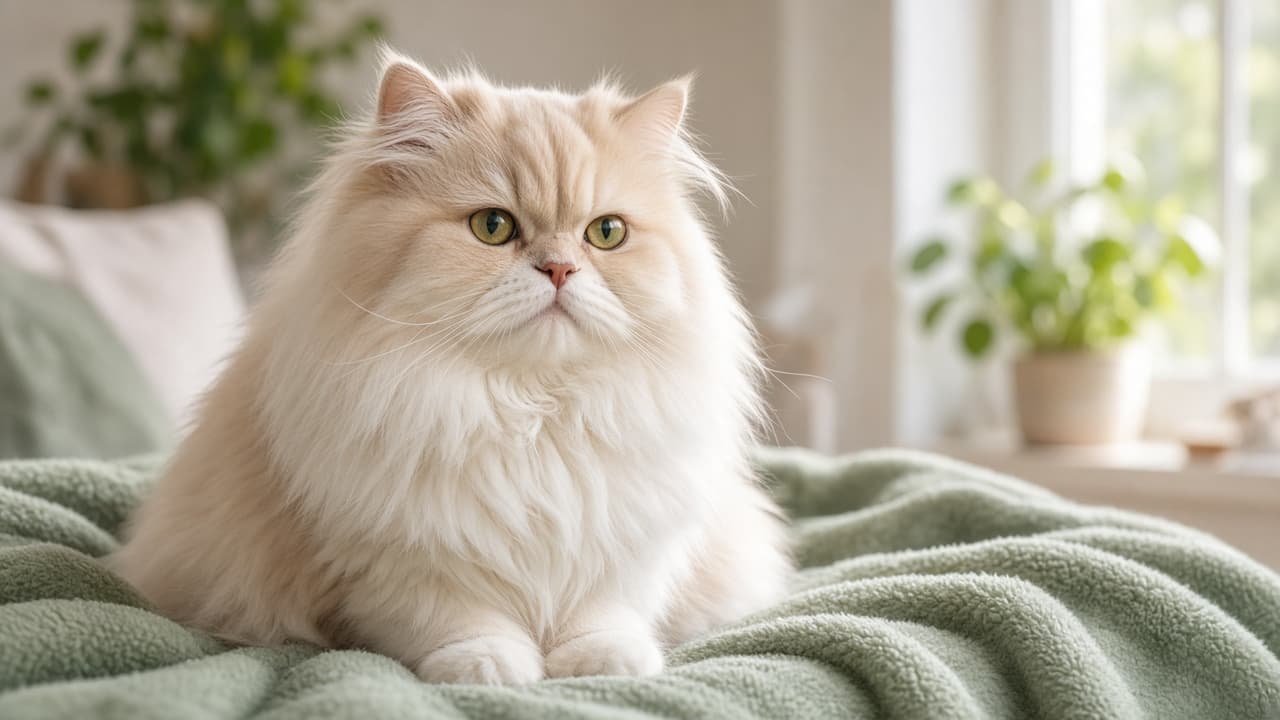
Persians are one of the most loved cat breeds in Bangladesh. Their round faces, big eyes and thick, flowing coats make them look like living cushions, and their calm, gentle nature suits flat and family life. But that beautiful coat and flat face come with real responsibilities. A Persian that is not groomed quickly develops painful mats, and a flat-faced cat needs a little extra help with eyes, eating and heat.
This guide walks through Persian cat care step by step: daily grooming, eye and face cleaning, what to feed, litter hygiene, staying cool in the heat, and which health checks to talk through with your vet.
What makes Persian cats different
Two features shape almost everything about caring for a Persian.
The long, dense coat. A Persian's fur is long and fine with a thick undercoat. It tangles easily and, if left alone, forms mats close to the skin. Mats pull on the skin, trap dirt and moisture, and can hide skin problems. Loose fur is also swallowed during self-grooming, which can lead to hairballs.
The flat face. Many Persians, especially modern "peke-face" or extreme types, have a very short muzzle. Cat welfare charity International Cat Care explains that this flat-faced (brachycephalic) shape can affect breathing, cause tears to overflow onto the face, crowd the teeth and make picking up food harder. Traditional or "doll-face" Persians have a slightly longer nose, but they still need regular face care.
Persians are also typically quiet, relaxed indoor cats. They are less likely to climb and run than active breeds, which matters for weight control.
Daily grooming: the most important job
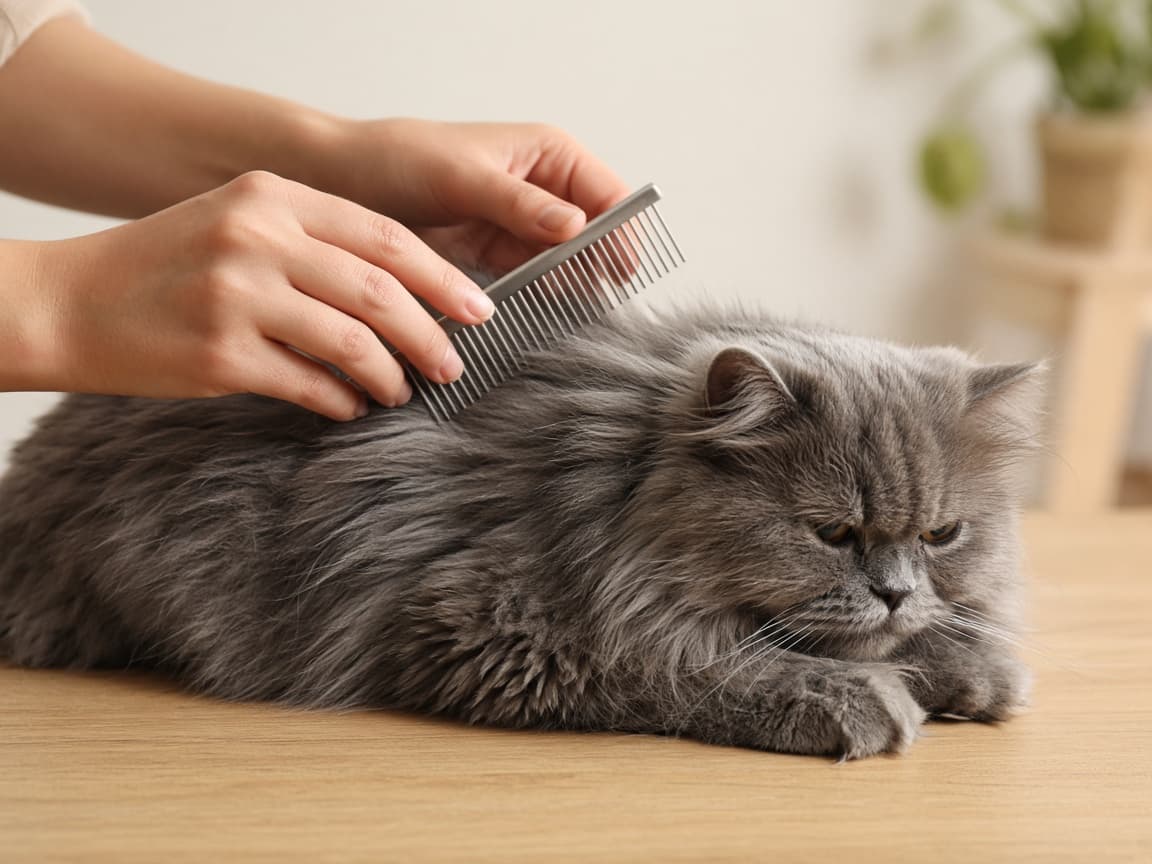
If you remember one thing from this guide, make it this: a Persian needs combing every day. The International Cat Association (TICA) describes daily combing with a metal comb as essential for the breed. A few minutes a day is far easier, and kinder to your cat, than trying to break up mats once they have formed.
The tools you need
- A wide-toothed metal comb for working through the coat and finding tangles.
- A fine-toothed metal comb for the face, feet and finishing.
- A soft slicker brush (optional) for fluffing the coat after combing.
- Blunt-ended scissors or a mat splitter only for small knots, used very carefully. If you are unsure, ask a groomer or your vet.
- Cat nail clippers.
- Soft cloths or cotton pads for the eyes and face.
How to comb a Persian, step by step
- Choose a calm time, such as after a meal, and sit your cat on your lap or a towel on a table.
- Start with the wide-toothed comb. Work in small sections, combing in the direction the fur grows, right down to the skin.
- Pay special attention to the areas that mat first: behind the ears, under the front legs (armpits), the belly, the chest and the fluffy "trousers" on the back legs.
- If you hit a knot, hold the fur at the base, close to the skin, so you do not pull, and tease the knot apart gently with your fingers or the end of the comb.
- Finish with the fine-toothed comb over the face and feet.
- Keep sessions short and positive. Praise your cat and offer a treat at the end.
Kittens accept grooming much more easily if they get used to it early, so start gentle daily sessions as soon as you bring a Persian kitten home.
Bathing
Persians often need bathing more than other cats because their coat can become greasy and dirty. TICA notes that regular baths are part of normal Persian care. Use a shampoo made for cats, rinse thoroughly, and dry the coat completely with a towel and a low, cool setting on a hair dryer if your cat tolerates it. A Persian should never be left damp, because a wet undercoat mats quickly. If bathing is stressful for your cat, a professional groomer can help.
Nails, ears and teeth
- Nails: TICA suggests trimming every week for kittens and every two to three weeks for adults. Only trim the clear tip and avoid the pink quick.
- Ears: Check the ears weekly. They should be clean and free from strong smells. Ask your vet before using any ear cleaner.
- Teeth: Flat-faced cats can have crowded teeth. Ask your vet how to care for your Persian's teeth and check them at every visit.
Eye and face care
Watery eyes are very common in Persians. Because of the shape of the face, tears often spill onto the fur instead of draining normally, leaving brown tear stains and damp skin in the folds around the nose.
Make face cleaning part of the daily routine:
- Use a soft cloth or cotton pad dampened with clean, lukewarm water. Use a fresh pad for each eye.
- Wipe gently from the inner corner of the eye outwards, never across the eye itself.
- Clean and dry the skin folds around the nose so moisture does not sit there.
- Dry the area gently afterwards.
Do not use human eye drops or creams. Contact your vet if you notice thick, yellow or green discharge, redness, squinting, a cloudy eye, or if your cat keeps pawing at its face. These can be signs of a problem that needs treatment.
What to feed a Persian cat
A Persian does not need exotic food, but it does need a complete and balanced diet that suits its face shape, coat and fairly relaxed lifestyle. Avoid feeding a homemade diet of rice and fish only. If you are curious about safe human foods as extras, see our guide on what human food cats can eat.
Kibble shape for a flat face
Some flat-faced cats find it hard to pick up small or flat kibble. Watch how your cat eats: if food keeps falling out of the mouth or your cat seems frustrated, try a different kibble or add wet food. Royal Canin makes breed-specific Persian foods with kibble designed by the brand to be easier for flat-faced cats to pick up, such as Royal Canin Persian Kitten dry food, which uses an almond-shaped kibble for Persian kittens up to 12 months. For more on feeding young cats in general, read our kitten food guide.
Food for skin and coat
A healthy coat starts on the inside. Complete foods made for skin and coat support are a popular choice for long-haired cats. On aristocatbd you will find options such as:
- Royal Canin Hair and Skin Care in Gravy, a complete wet food for adult cats whose coat needs extra support.
- Royal Canin Intense Beauty in Gravy, a complete wet food for adult cats, made to help maintain coat and skin.
- Nature Bridge Classic Beauty cat food, a complete dry food for all life stages with fish and flaxseed as sources of omega fatty acids.
- Wanpy Skin and Coat creamy treats, a lickable treat that works well as a reward after grooming.
Treats should stay a small part of the daily diet. Always change foods gradually over about a week to avoid stomach upsets, and ask your vet if your cat has skin problems, hair loss or itching, because food alone may not be the answer.
Wet food, water and weight
Many Persian owners mix wet and dry food. Wet food adds moisture to the diet and is often easier for flat-faced cats to eat. Our guide to wet vs dry cat food explains the pros and cons of each.
Keep fresh water available at all times, in more than one spot if possible. Persians tend to be calm and less active, and TICA notes they can become overweight, particularly after neutering. Follow the feeding guide on the pack as a starting point, weigh portions instead of guessing, and ask your vet what a healthy weight looks like for your cat.
Litter tray and hygiene for a long-haired cat
Long fur and litter do not always mix. International Cat Care notes that long-haired, flat-faced cats can have trouble keeping their back ends clean. Litter can stick in the fur on the feet and bottom, and any mess gets trapped in the coat.
- Keep the tray very clean. Scoop at least once or twice a day.
- Choose a clumping litter that makes waste easy to remove, such as Coziecat Premium Clumping Cat Litter. Our guide on how to choose cat litter compares the main types.
- Use a large, open tray so your Persian can turn around without the coat brushing the sides.
- Check the bottom daily and gently clean any soiled fur. Some owners have a groomer trim a neat "hygiene clip" around the rear.
Contact your vet if your cat has loose stools that keep soiling the coat, strains in the tray or stops using it.
Keeping a Persian cool in Bangladesh's heat
Bangladesh's long, hot and humid summers are hard on Persians. UK vet charity PDSA lists long-haired and flat-faced cats among those at higher risk of heatstroke, because a thick coat holds heat and a short muzzle makes it harder to cool down by breathing.
Simple ways to help:
- Keep your Persian indoors during the hottest part of the day, in a shaded, well-ventilated room. A fan or air conditioning helps, but do not point a fan directly at your cat for hours.
- Provide several bowls of fresh water and refresh them often.
- Offer cool spots to lie on, such as tiled floors.
- Keep up daily combing. Removing loose undercoat helps air move through the coat.
- Never leave a cat in a closed car or a hot, closed room.
Panting, drooling, restlessness, weakness or collapse can be signs of heatstroke. This is an emergency: move your cat somewhere cool and contact a vet straight away.
Health checks to discuss with your vet
Every cat is an individual, and not every Persian will have health problems. Still, a few issues are well known in the breed, and it is worth asking your vet about them.
- Polycystic kidney disease (PKD). An inherited condition in which cysts form in the kidneys. The Cornell Feline Health Center lists signs such as increased thirst and urination, poor appetite, weight loss and lethargy, usually appearing later in life. If you are buying a kitten, International Cat Care advises asking the breeder for proof that the parents have been tested.
- Breathing problems. Noisy breathing, snoring or struggling for breath, especially in very flat-faced cats.
- Heart and eye conditions. TICA mentions screening for conditions such as hypertrophic cardiomyopathy (HCM), a heart disease, and progressive retinal atrophy (PRA), an eye disease.
Regular check-ups, vaccinations and parasite control are as important for Persians as for any other cat. Your vet can advise on a schedule that fits your cat.
The bottom line
Caring for a Persian is a daily commitment, but it quickly becomes a routine you both enjoy. Comb every day, wipe the eyes and face, keep the litter tray spotless, feed a complete food that suits a flat face and long coat, and protect your cat from the heat. Combine that with regular vet check-ups and your Persian will be comfortable, clean and happy for years to come.