Quick answer
Most cats do not drink much water on their own, so you have to make water easy and appealing. Put out several wide, shallow ceramic or glass bowls filled to the brim, place them away from food and the litter tray, change the water every day, try a cat water fountain, and add moisture through wet food or a meat broth topper. If your cat suddenly drinks much more or much less than usual, ask your vet.
Many cat owners in Bangladesh notice the same thing: the water bowl stays full all day. Cats have a naturally low thirst drive, and a cat on a mostly dry diet can easily take in less water than is ideal, especially during our long, hot summers. This guide explains why cats drink so little, how much water they need, the signs of dehydration, and practical ways to get your cat to drink more water.
Why cats don't drink much water
Domestic cats are thought to descend from desert-living wildcats that got most of their moisture from their prey. A mouse or bird is mostly water, so their ancestors rarely needed to drink. Today's pet cats still have a weak urge to drink, which is why the American Animal Hospital Association (AAHA) describes cats as having a naturally low thirst drive.
Cats are also fussy about how and where they drink. Many dislike:
- Narrow bowls where their whiskers brush the sides.
- Water placed right next to their food.
- Water near the litter tray.
- Bowls in busy, noisy spots or in corners where they cannot see what is coming.
- Stale water, or water that tastes of plastic or metal.
How much water does a cat need?
According to the Cornell Feline Health Center, a cat needs roughly 4 ounces (about 120 ml) of water per 5 pounds of lean body weight each day. That works out at around one cup of water a day for a 10-pound (about 4.5 kg) cat.
The important point is that this total includes the water in food, not only what your cat drinks from the bowl. The type of food makes a big difference:
- Dry food (kibble) contains only around 6–10% water, according to Cornell.
- Wet food (pouches and cans) contains at least 75% water, and often more.
Signs your cat may be dehydrated
Dehydration can develop quietly, so it helps to know what to look for. Cornell lists these common signs:
- Lethargy or weakness.
- Poor appetite.
- Dry or sticky gums.
- Sunken-looking eyes.
You may also hear about the "skin tent" test, where you gently lift the skin over the shoulders and see how quickly it falls back. Cornell notes this can be misleading, because older cats often have less elastic skin even when they are well hydrated. It is a rough guide, not a diagnosis.
If you think your cat is dehydrated, contact your vet promptly. Dehydration is often a sign of another problem, and your vet can check what is going on.
When drinking more is a warning sign
The PDSA and VCA both advise that a sudden change in thirst can be a sign of illness. If your cat suddenly starts drinking a lot more than usual, or weeing much more, book a vet check. It helps to note roughly how much your cat drinks in a day and, if your vet asks, bring a urine sample. Never take water away from a cat that is drinking a lot; always ask your vet first.
10 ways to get your cat to drink more water
These tips come from International Cat Care, Cats Protection and VCA. Try a few at a time and see which your cat likes.
1. Choose the right bowl
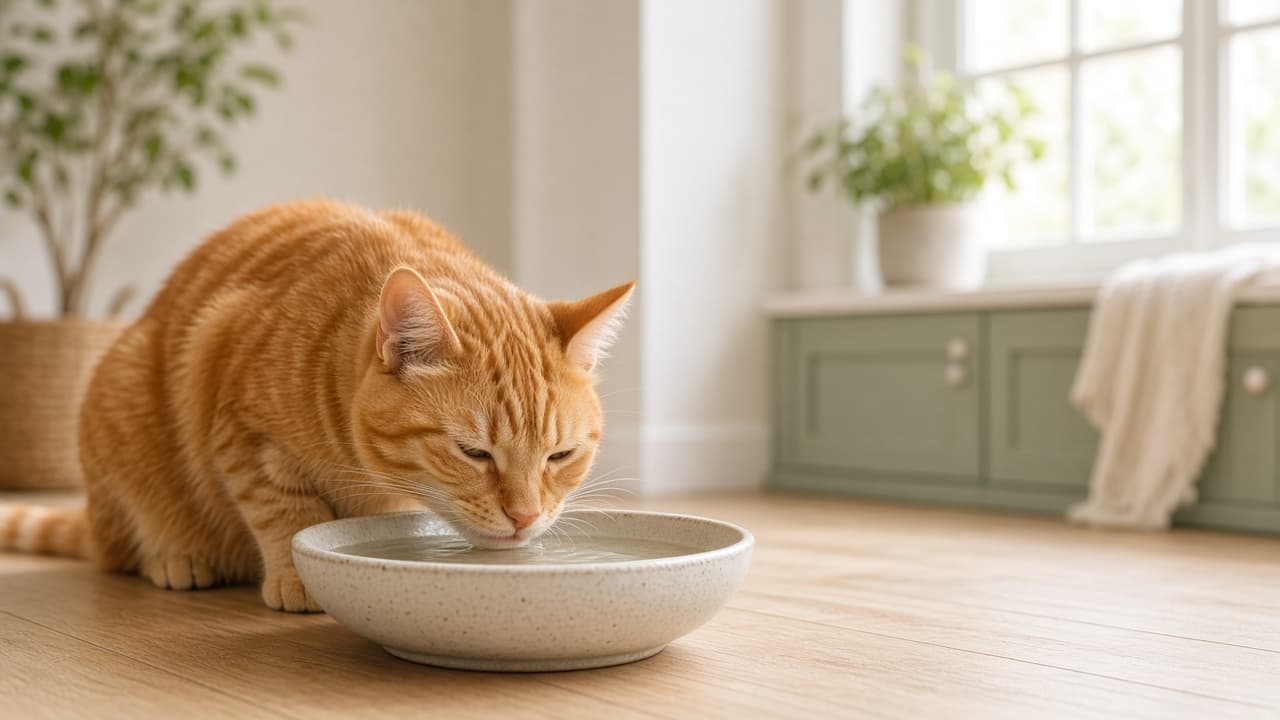
Use wide, shallow bowls made of glass or ceramic. International Cat Care recommends glass or ceramic, and Cats Protection notes that plastic and metal bowls can give water a taste some cats dislike. A wide bowl stops whiskers touching the sides, which many cats find uncomfortable.
2. Fill the bowl to the brim
Many cats prefer not to put their head down into a bowl. A bowl filled to the brim lets your cat drink while watching the room.
3. Keep water away from food and litter
In the wild, cats avoid drinking near their food or toilet areas, possibly to avoid contamination. Place water bowls in a separate spot from the feeding area, and well away from the litter tray. International Cat Care also advises avoiding "double bowls" that hold food and water side by side.
4. Offer more than one water station
A good rule from International Cat Care is one water bowl per cat, plus one extra, spread around the home. In a multi-storey house, put water on every floor. In a multi-cat home this matters even more: Cornell points out that tension between pets can stop a shy cat from reaching the water bowl.
5. Pick quiet, safe spots
Choose calm places away from children, other pets and household traffic. Many cats prefer a bowl placed slightly away from the wall, so they can drink facing the room.
6. Change the water every day
Wash and refill bowls at least once a day, and more often in hot weather or if dust and fur collect on the surface. Some cats prefer filtered water, or tap water that has been boiled and cooled, so try both.
7. Try moving water
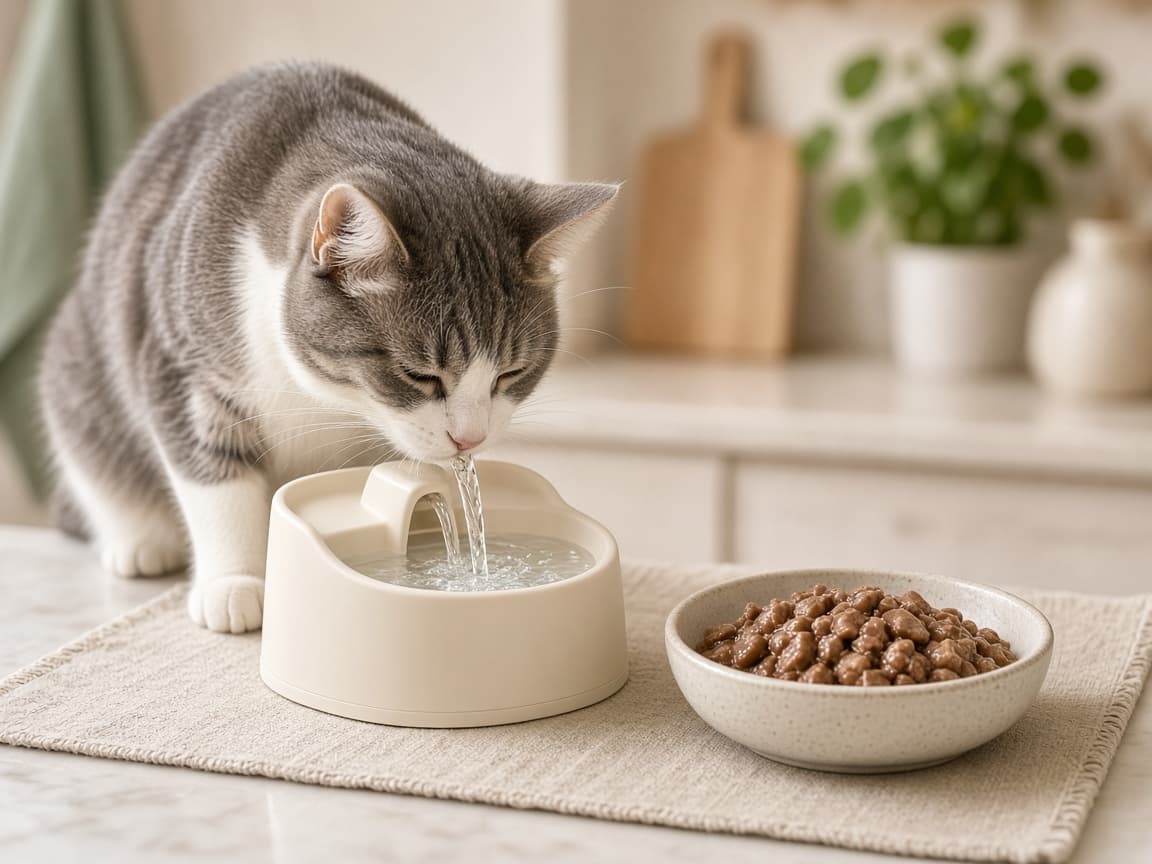
Some cats are fascinated by running water and will happily drink from a tap. A cat water fountain keeps water moving, which many cats find more appealing. Introduce a fountain gradually and keep a normal bowl available while your cat gets used to it. Clean the fountain and change any filters as the maker instructs. A simpler trick suggested by International Cat Care is floating a ping pong ball in a wide bowl to get playful cats interested.
8. Feed more wet food
Because wet food is mostly water, it is one of the easiest ways to raise your cat's intake. You do not have to switch completely; many owners feed a mix of wet and dry. If you change your cat's diet, Cats Protection advises doing it gradually over several days to avoid an upset stomach.
At aristocatbd we stock a range of complete wet foods, such as Felix Adult Tuna in Jelly, a complete and balanced pouch for adult cats. For more on the pros and cons, read our guide to wet vs dry cat food.
If your vet has talked to you about your cat's urinary health, ask whether a food such as Royal Canin Urinary Care in Gravy suits your cat. It is a complete wet food for adult cats designed to support a healthy urinary tract, and its high moisture content encourages hydration. It is a preventive food, not a prescription diet, so always follow your vet's advice if your cat has a diagnosed problem.
9. Add a meat broth or tasty topper
A small amount of flavoured liquid can tempt reluctant drinkers. International Cat Care suggests unsalted water from poaching chicken or fish, while VCA mentions a little low-sodium broth with no spices. Never use human stock cubes, salty gravy or anything containing onion or garlic, which are not safe for cats.
A simpler option is a broth made for cats: Wanpy Meat Broth Chicken is a slow-cooked, grain-free broth with real meat pieces and very high moisture, served alone or poured over your cat's usual food. There is also a Wanpy Tuna and Shrimp broth for fish-loving cats. These are supplements, not a complete diet, so use them alongside normal meals, follow the pack's feeding guide and refrigerate leftovers.
Lickable treats such as Wanpy Creamy Treats Tuna also add a little moisture. Keep all treats to a small part of the daily diet, around 10% of calories.
You can browse all our pouches, broths and treats in the food and treats aisle.
10. Keep liquids at room temperature
Cats usually prefer water, broth and wet food at room temperature rather than straight from the fridge. International Cat Care advises talking to your vet before adding extra water to your cat's food, because it can change the food's nutritional balance.
Keeping your cat hydrated in Bangladesh's heat
Bangladeshi vets have warned that dehydration and heatstroke are real dangers for pets in extreme heat. Cornell's feline heat safety advice includes:
- Make sure your cat always has access to fresh, clean water.
- Offer extra water stations during heat waves.
- Give your cat access to cool, shaded rooms, away from direct sun.
- Some cats enjoy playing with ice cubes in a bowl, which can encourage drinking.
Track what goes in and what comes out
You cannot easily measure how much your cat drinks, but you can notice patterns. With a clumping litter such as Coziecat Premium Clumping Cat Litter (Lavender), you can see how many urine clumps there are each day and roughly how big they are. A clear change, far more or far fewer than usual, is worth mentioning to your vet. You will find more options in our litter and tidy aisle, and our guide on how to choose cat litter explains the different types.
The bottom line
Getting a cat to drink more water means working with their instincts. Use wide, shallow bowls, keep water fresh and away from food and litter, offer several water stations, and add moisture through wet food or a cat-safe broth. Watch for changes in drinking, appetite or litter habits, and ask your vet whenever something seems different.