Quick answer
Cat treats are fine as a small extra, but they should make up no more than about 10% of your cat's daily calories. For an average healthy adult cat that is only around 20–25 calories a day. Choose a treat type that suits the job (lickable creamy treats for bonding and tablets, crunchy treats for training and play), check the pack's feeding guide, give treats in small portions and cut back on meals a little if you treat often. If your cat has a health condition or eats a vet-prescribed diet, ask your vet before giving any treats.
Written by the aristocatbd team
Treats are one of the easiest ways to bond with your cat and reward good behaviour, but they are also easy to overdo. This guide explains the main types of cat treats sold in Bangladesh, how many treats a cat can have per day, how to choose a good one and how to use treats well.
Are cat treats good for cats?
Treats are not harmful in themselves, but most of them are not designed to be a complete diet. VCA Animal Hospitals points out that many cat treats are not "complete and balanced", meaning they do not contain all the nutrients your cat needs. That is fine for a snack, as long as treats stay a small part of what your cat eats.
Used well, treats can help you:
- Build trust with a new cat or a shy rescue.
- Reward your cat for using a scratching post, coming when called or getting into a carrier.
- Make giving tablets easier, since soft treats can hide a pill (check with your vet first that the medicine can be given with food).
How many treats can a cat have per day?
There is no single number of treats that suits every cat, because treats and cats both vary. The rule used by veterinary bodies is based on calories:
- The World Small Animal Veterinary Association (WSAVA) says treats should make up less than 10% of a cat's daily calorie intake.
- VCA Animal Hospitals uses the same 90/10 rule: 90% of calories from complete and balanced food, up to 10% from treats and snacks.
- The Cornell Feline Health Center gives a slightly looser rule of thumb of 10–15%.
To make this practical, WSAVA's guide gives approximate maximum daily treat calories for an average healthy adult cat at ideal weight:
- A 3 kg cat: about 20 calories a day from treats.
- A 4 kg cat: about 22 calories a day.
- A 5 kg cat: about 25 calories a day.
That is not much. WSAVA notes that just 28 g (1 oz) of cooked chicken breast is about 47 calories, which is already roughly double the daily treat allowance for many cats.
How to work out your cat's treat budget
- Find the calories per treat on the pack. If they are not listed, WSAVA suggests contacting the manufacturer.
- Ask your vet roughly how many calories your cat needs a day, especially if your cat is overweight, very active, a kitten or a senior.
- Take 10% of that number. This is your daily treat budget.
- Divide the budget by the calories per treat to see how many pieces or how much of a tube fits.
- If you treat every day, reduce the main meals slightly so the total stays the same.
Types of cat treats
Creamy and lickable treats
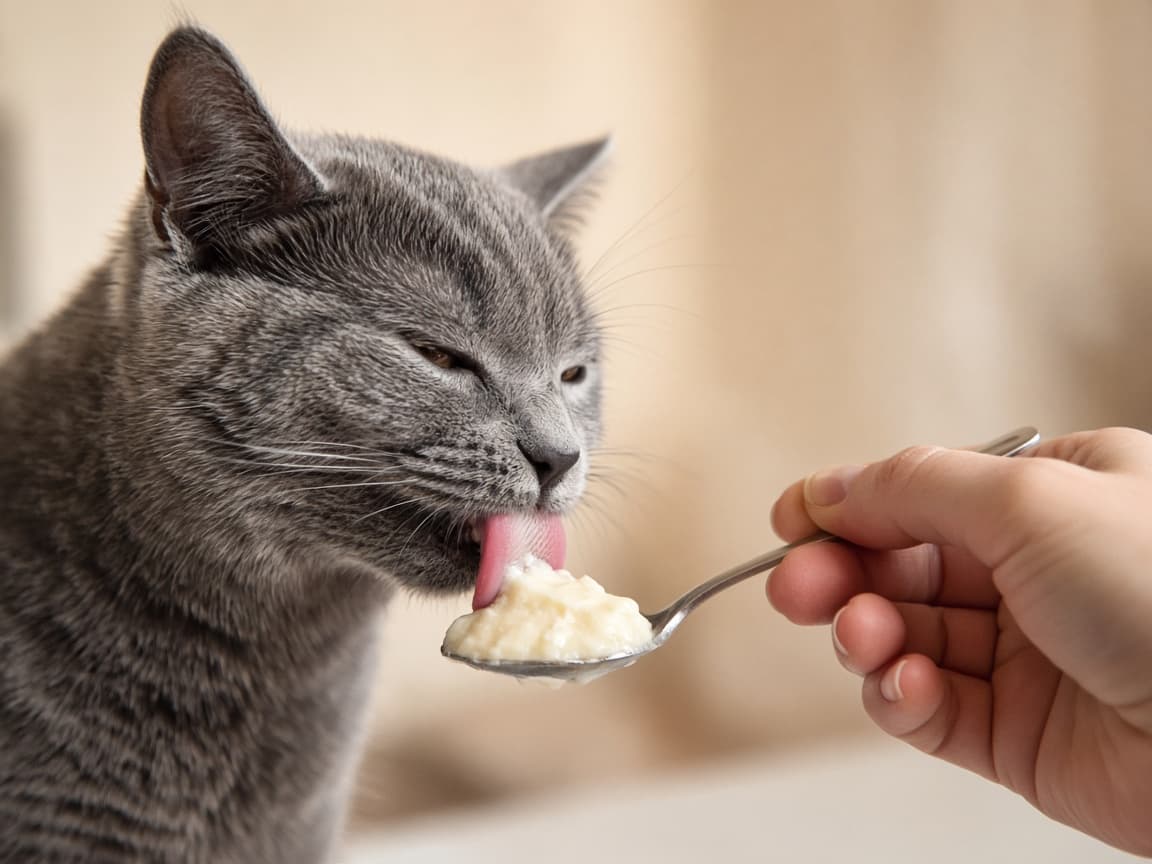
These are smooth purées in single-serve tubes or sachets that your cat licks straight from the stick or from a spoon or bowl. Examples in our range:
- SmartHeart Creamy Cat Treat Chicken comes as four 15 g sachets, which makes portioning easy.
- Wanpy Creamy Cat Treats Tuna comes as five 14 g tubes. Wanpy lists taurine and vitamins C and E on its creamy range.
- Wanpy Skin and Coat Creamy Cat Treats Tuna and Salmon is a functional recipe that Wanpy says adds fish oil and biotin.
- Me-O Creamy Cat Treat Chicken and Liver comes as four 15 g sachets from the Thai brand Me-O.
Creamy treats are mostly water. The Wanpy creamy treats, for example, list moisture at up to 90% on their guaranteed analysis. That makes them handy for adding a little extra moisture, and the soft texture suits older cats. You do not have to give a whole tube at once.
Best for: bonding, hiding tablets, calming a cat during grooming or nail trims, and fussy eaters.
Crunchy treats
Crunchy treats are small, dry biscuits, often with a filling or in mixed shapes. Friskies Party Mix Classic is a well-known example and comes in a resealable 60 g pack. Purina says its crunchy texture helps reduce plaque build-up. If dental health is a concern, ask your vet what they recommend rather than relying on treats.
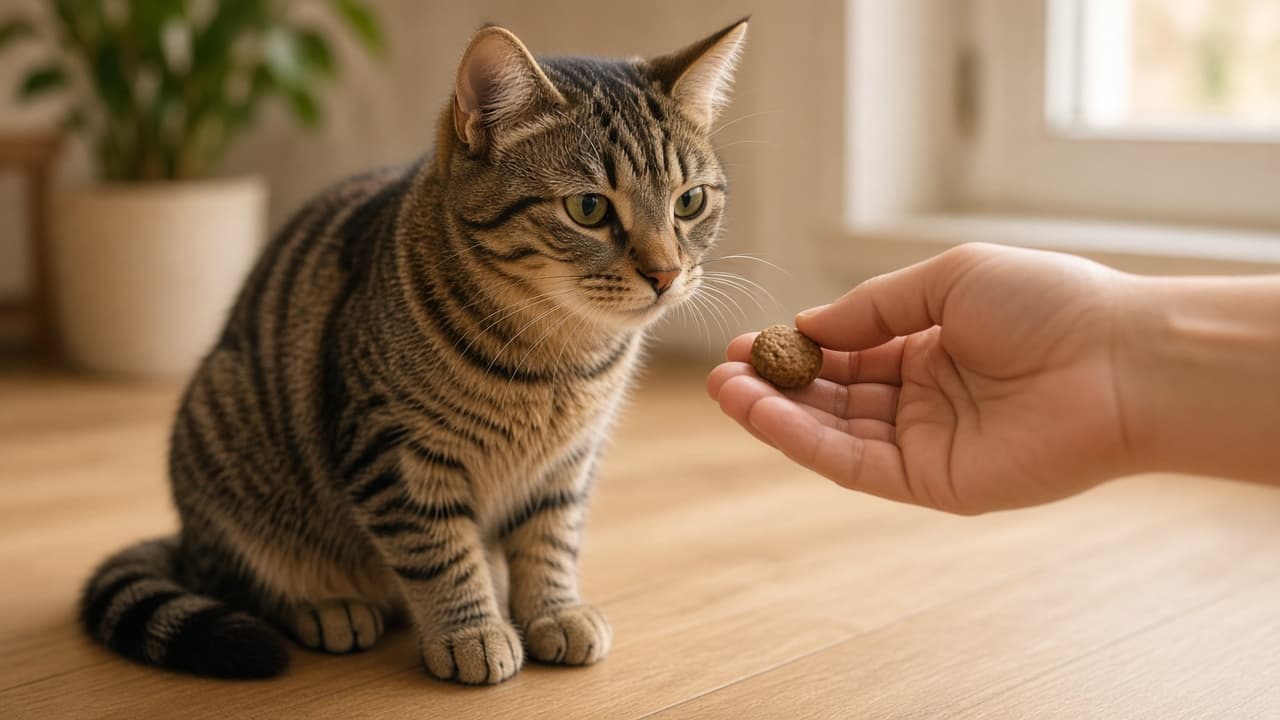
Crunchy treats are small, easy to carry and do not make your fingers messy, which makes them ideal for training. Because they are dry and energy-dense, it is easy to give too many, so count them.
Best for: training, food puzzles and treat balls, and quick rewards.
Broths and meal toppers
Wanpy Meat Broth for Cats Chicken is a high-moisture broth that can be served alone or poured over dry food. Wanpy's own feeding guide suggests about one pouch a day for cats under 2 kg and one to two pouches for cats of 2–4 kg, alongside a complete and balanced diet. Our guide on how to get your cat to drink more water explains how toppers fit into a hydration routine.
Best for: picky eaters, cats that drink too little and senior cats.
Your cat's own food
VCA suggests a tip that costs nothing: use a few pieces of your cat's regular dry food as treats. Many food-motivated cats will happily work for their usual kibble, especially in a puzzle feeder. Just take those pieces out of the day's main portion.
How to choose a good cat treat
With so many flavours on the shelf, these checks help you choose well:
- Read the label. Look for a named protein such as chicken, tuna or salmon, and check whether the pack lists calories and a feeding guide.
- Check the life stage. Some treats are made for adult cats. If you are buying for a kitten, check the pack's age guidance and ask your vet if unsure. Our kitten food guide covers what young cats need.
- Think about texture. Senior cats or cats with sore mouths may prefer soft, lickable treats, while active young cats may enjoy crunchy treats in a puzzle toy.
- Pick the right size. WSAVA advises choosing treats of an appropriate size and shape to reduce the risk of choking, and supervising your cat with chews.
- Do not trust "light" labels alone. VCA notes that treats labelled "light" or "lower calorie" are often not much lower in calories than others.
- Introduce one new treat at a time. VCA advises starting with a small amount, especially if your cat has a sensitive stomach.
- Buy genuine, in-date stock. Check the expiry date and that the pack is sealed and undamaged, and store it in a cool, dry place away from Bangladesh's heat and humidity.
When to ask your vet first
Check with your vet before giving treats if your cat:
- Has a medical condition, food allergy or sensitive stomach.
- Eats a veterinary prescription diet. VCA notes that extra foods can stop some prescription diets, such as urinary diets, from working properly.
- Is overweight or on a weight-loss plan.
Treats to avoid
Some "treats" that people commonly give cats are not a good idea. Based on guidance from WSAVA and the Cornell Feline Health Center:
- Milk and dairy. Many cats are lactose intolerant and can get an upset stomach from milk.
- Bones, cooked or raw, which WSAVA warns can cause serious injury.
- Raw meat and raw treats, which can carry harmful bacteria and parasites. VCA also urges caution with freeze-dried or dehydrated raw treats.
- Canned fish meant for people as a regular treat. Cornell notes that some cats fed human canned fish products have developed serious problems.
- Toxic foods such as onions, garlic, chives, grapes, raisins, chocolate, xylitol, alcohol, raw yeast dough and caffeinated drinks.
For a full list of which foods are safe, see our guide on what human food cats can eat.
Smart ways to use treats
Training and good habits
Cats can be trained with rewards. Ask for a simple behaviour first, such as sitting, touching your hand with their nose or walking into a carrier, and reward right away, using tiny pieces.
Tablets and vet visits
A small amount of creamy treat on a spoon can make a pill easier to give, and a lick of something tasty can help during nail trims or brushing. Check with your vet that the medicine can be given with food. If you have a long-haired cat, our Persian cat care guide explains how to make grooming a calm routine.
Enrichment and play
VCA suggests putting dry treats or kibble in a snuffle mat or treat-dispensing ball, and spreading wet or creamy treats on a lick mat.
How much do cat treats cost in Bangladesh?
Prices vary by brand, pack size and shop, and they change often. As an approximate market range only, checked at Bangladeshi online pet shops in October 2026, multipacks of creamy treats (four or five tubes of about 14–15 g) were mostly listed at roughly ৳150–৳250 per pack. Single tubes and larger boxes cost less or more. For current market ranges on cat food more broadly, see our cat food price in Bangladesh page, and check each product page for aristocatbd's own price.
The bottom line
Treats are a lovely way to bond with your cat, but a little goes a long way. Keep them below about 10% of daily calories, pick the right type for the job, read the label, skip risky human foods and adjust meals if you treat often. When your cat has a health condition or special diet, ask your vet before adding anything new.