Quick answer
Most kittens learn to use a litter box quickly because digging and burying is natural to them. Keep your new kitten in one small, quiet room with a low-sided litter box, place them in the box after meals, naps and play, praise calm success, scoop at least once a day and clean any accidents with an enzyme cleaner. Never punish mistakes. If your kitten keeps going outside the box, or strains, cries or has diarrhoea, ask your vet.
Written by the aristocatbd team
One of the first questions new kitten owners in Bangladesh ask is how to make sure the kitten uses the litter box instead of the floor, the bed or a corner behind the sofa. The good news is that cats are naturally clean animals. VCA Animal Hospitals notes that most kittens and cats prefer to go in loose, sandy material and will often find a nearby litter box on their own. Your job is to make the right spot easy to find and pleasant to use.
This guide explains how to litter train a kitten step by step, how to handle accidents and how to train an adult or rescued street cat.
When can kittens start litter training?
Very young kittens cannot go to the toilet on their own. According to Alley Cat Allies, kittens under about four weeks old need to be stimulated after each feeding. Their mother does this by licking them; if you are hand-raising an orphaned kitten, a warm, damp cotton ball or soft cloth gently rubbed on the bottom does the same job.
From around three to four weeks, kittens start to go by themselves, and four weeks is a common age to introduce a small, shallow litter tray. Most kittens adopted at eight weeks or older have already learned the basics from their mother and only need help finding the box in their new home.
If you have found a very young or orphaned kitten, ask your vet for advice on its care.
What you need before you start
A low-sided litter box
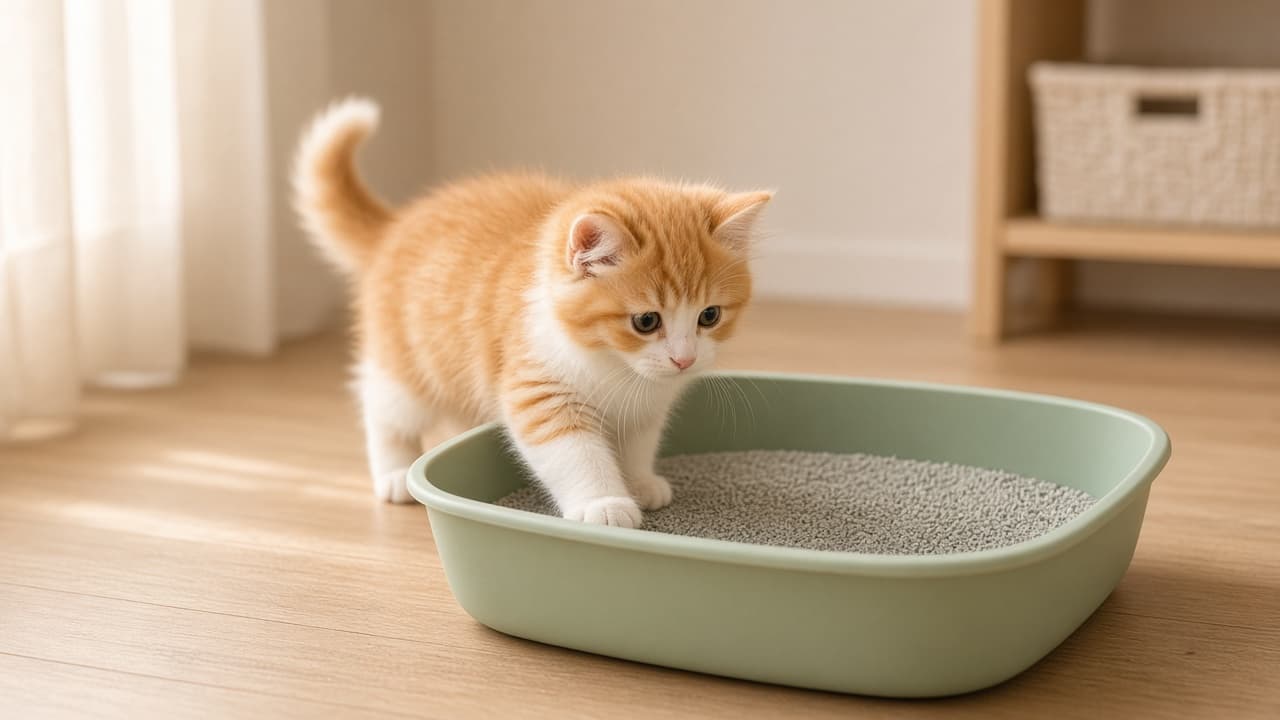
Kittens have short legs, so the box should have low sides they can step over easily. Cornell Feline Health Center advises low-sided boxes for kittens, elderly cats and cats with mobility problems. It should be big enough for the kitten to turn around and dig, and you may need a larger box as your kitten grows.
Cornell also notes that most cats prefer an uncovered box that lets odours escape and gives them a clear view around them. A covered box can come later if your cat is happy with it.
The right litter
VCA says most cats prefer a clumping-style litter, and Cornell adds that most cats like a finer, unscented texture. For very young kittens, however, many rescue groups, including Alley Cat Allies, recommend a non-clumping litter at first, because tiny kittens sometimes taste or eat litter while they are learning. If your kitten is very young, ask your vet which type to start with.
Once your kitten is a little older and using the box well, a clumping litter makes daily scooping simple. In our litter and tidy aisle we stock clumping bentonite litters such as CozieCat Premium Clumping Cat Litter Lavender 5L, which forms firm clumps and is low dust, or the lemon-scented version. If your cat is sensitive to smells, introduce any scented litter gradually and watch how your kitten reacts.
For a full comparison of bentonite, tofu and crystal litters, read our guide on how to choose cat litter in Bangladesh.
A small, quiet starter room
VCA recommends keeping a new kitten in one cosy, cat-proofed room at first. Put in:
- The litter box.
- Food and water bowls, placed well away from the litter box.
- A soft bed or two resting spots.
- A few safe toys.
Cats do not like to eat close to where they toilet, so keep the food and water on the opposite side of the room from the box.
How to litter train a kitten: step by step
Step 1: Show your kitten the box on day one
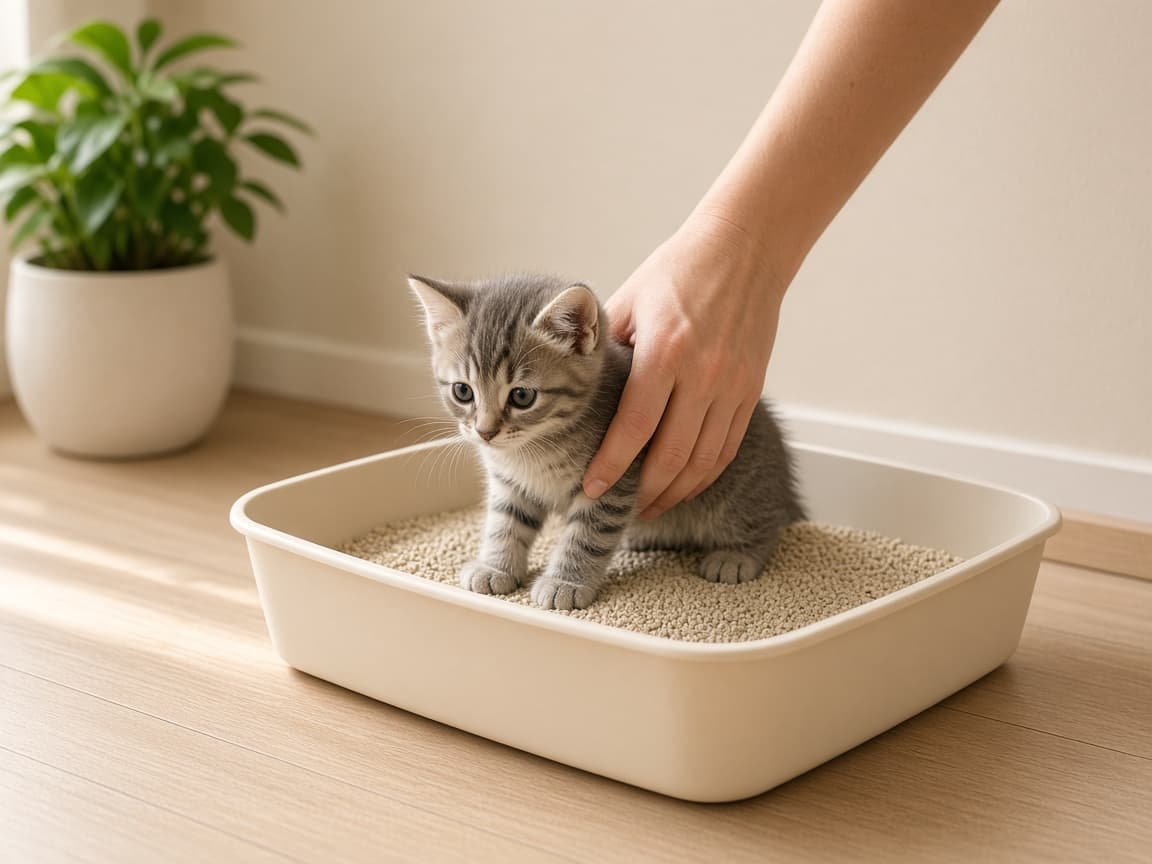
When you bring your kitten home, gently place them in or next to the litter box so they can sniff it and feel the litter under their paws. Let them explore at their own pace. Do not hold them in the box.
Step 2: Keep them in the starter room
Let your kitten live in the starter room until they use the box reliably. VCA advises that kittens should not roam the house unsupervised until they consistently use the litter box. A big house is confusing for a small kitten, and they may not find the box in time.
Step 3: Use the natural toilet times
Kittens usually need to go shortly after waking up, after eating and after a play session. At these times, gently carry your kitten to the box and set them on the litter. If you are feeding a kitten food such as Felix Kitten Pouch Chicken in Jelly, a quick visit to the box a little while after each meal builds a good routine. Our kitten food guide explains how often kittens should eat at each age.
Step 4: Watch for the signs
Sniffing the floor, scratching or pawing at the ground, circling and crouching are all signs a kitten is about to go. VCA suggests gently digging in the litter with your fingers or a scoop when you see these signs, which often invites the kitten to come and use the box. Move calmly so you do not frighten them.
Step 5: Praise quietly and let them be
Let your kitten finish in peace, then offer soft praise or a gentle stroke. Never pick them up in the middle of using the box.
Step 6: Keep the box clean
Cats can refuse a dirty box. Cornell advises removing clumps and faeces daily if you use clumping litter and topping up with fresh litter as needed. For kittens, the Stray Cat Alliance suggests scooping at least twice a day. The CozieCat pack suggests filling the tray to a depth of about 5 to 7 cm, and many kittens are happy with this. Wash the whole box regularly with a mild detergent, dry it and refill with fresh litter.
Step 7: Give more space slowly
Once your kitten uses the box reliably, let them explore one more room at a time while you supervise. In a large flat or a house with more than one floor, add a second box so one is always close by. VCA and Cornell both suggest having one more litter box than the number of cats in the home.
Where to put the litter box
Cornell says most cats prefer a spot that is quiet, private, separate from their feeding area and easy to reach at any time of day. In a typical Bangladeshi flat, good options include:
- A quiet corner of a spare room or the end of a hallway.
- A bathroom that is never locked or shut, so the kitten can always get in.
- A covered balcony corner, as long as it is safe, sheltered from rain and not too hot.
Avoid placing the box:
- Next to food and water bowls.
- In a busy kitchen or right beside the main door.
- Next to a noisy washing machine.
- Somewhere a dog, a child or another cat could corner the kitten.
What to do if your kitten has an accident
Accidents are normal in the first weeks, and how you react matters.
Never punish
VCA is clear: do not punish your kitten or make them sniff the accident. Punishment can make a kitten afraid of you or of going in front of you, which can lead to more hidden accidents.
Clean it properly
Cats tend to return to places that smell of urine. Cornell advises cleaning soiled areas quickly and neutralising the smell, not just covering it. Use an enzyme-based pet cleaner and avoid products containing ammonia or vinegar, which Cornell notes smell like urine to a cat.
Work out why it happened
Ask yourself a few questions:
- Is the box too far away, or too hard to climb into?
- Is it dirty, or is the litter too deep or too shallow?
- Did you change the litter suddenly? Cornell recommends switching litter gradually by mixing small amounts of new litter into the old.
- Is the box in a noisy or busy spot?
- Is the kitten choosing a soft surface such as a rug or bed? VCA suggests working out what surface your kitten prefers and offering something similar in the box.
If accidents keep happening in one spot, try a second litter box there, or put the food bowl there, since Cornell notes cats prefer to eat and toilet in separate places.
How to litter train an adult cat or a rescued street cat
Many cats in Bangladesh are adopted from the street, and an adult cat that has always gone outside may not know what a litter box is for. The same steps work, with extra patience:
- Start in one room. VCA notes that newly adopted adult cats may also need a period of confinement while they learn where the box is.
- Match what they know. A cat used to going in soil or sand may prefer a fine, soft litter. Cornell suggests matching the litter to the surface your cat prefers; some owners mix in a little soil or sand at first, then change gradually once the habit is set.
- Use a bigger box. Larger adult cats need bigger boxes, so make sure your cat can turn around comfortably.
- Go slow with changes. Keep the same box, litter and spot for the first weeks while your cat settles in.
If your adult cat is not neutered and is spraying small amounts of urine on walls or furniture, that is marking rather than a training problem. Cornell notes that neutering often reduces spraying. Ask your vet about the right time to neuter or spay.
When to ask your vet
Litter box problems are not always about training. Cornell points out that cats with medical problems may not always act sick, and a cat that cannot reach the box in time may start going elsewhere. Ask your vet promptly if your kitten or cat:
- Strains, cries or spends a long time in the box with little result.
- Goes to the box very often, or passes blood.
- Has diarrhoea or constipation.
- Suddenly stops using the box after being well trained.
- Is drinking and weeing much more than usual. Our guide on how to get your cat to drink more water covers healthy hydration habits.
Your vet can check for an underlying problem before you work on the training side.
The bottom line
Litter training a kitten is mostly about setting things up well: a low-sided box, a litter your kitten likes, a quiet spot away from food, a small starter room and a clean box every day. Take your kitten to the box after meals, naps and play, stay calm about accidents and give more space slowly. If problems continue or your kitten seems unwell, ask your vet.