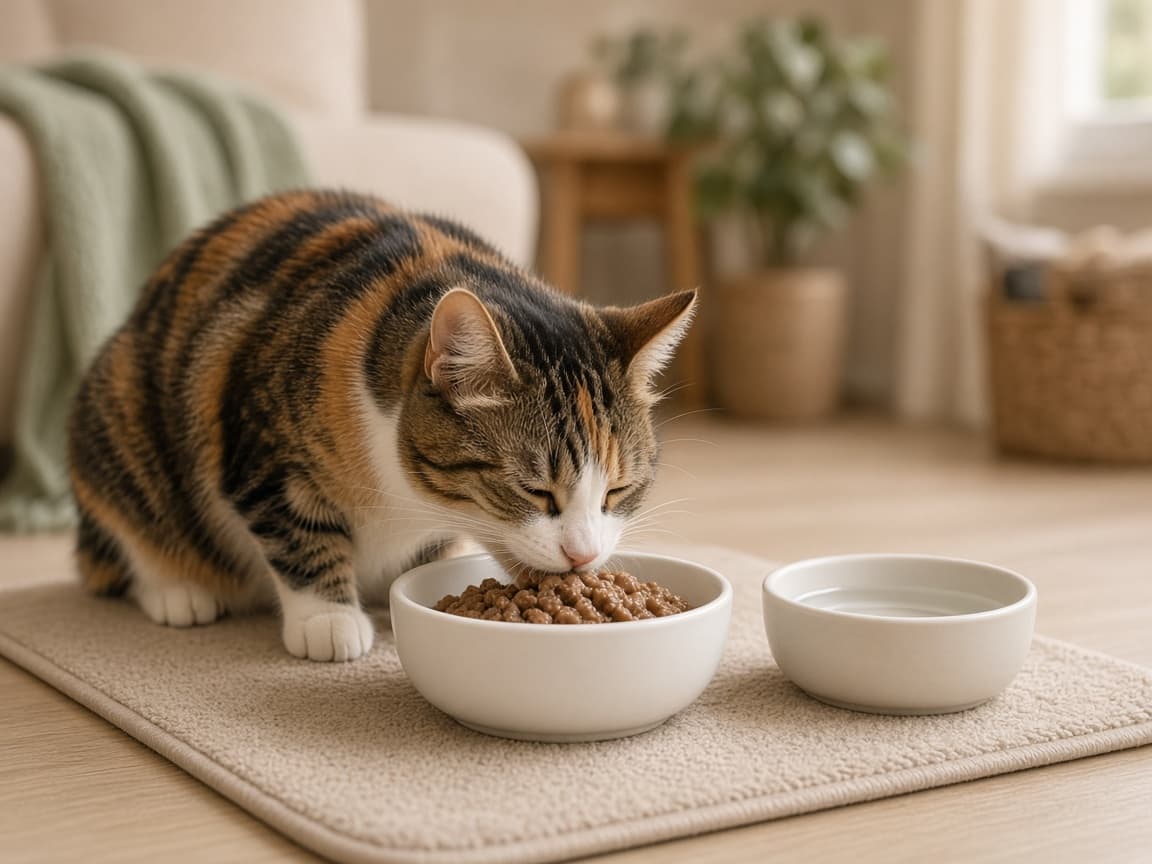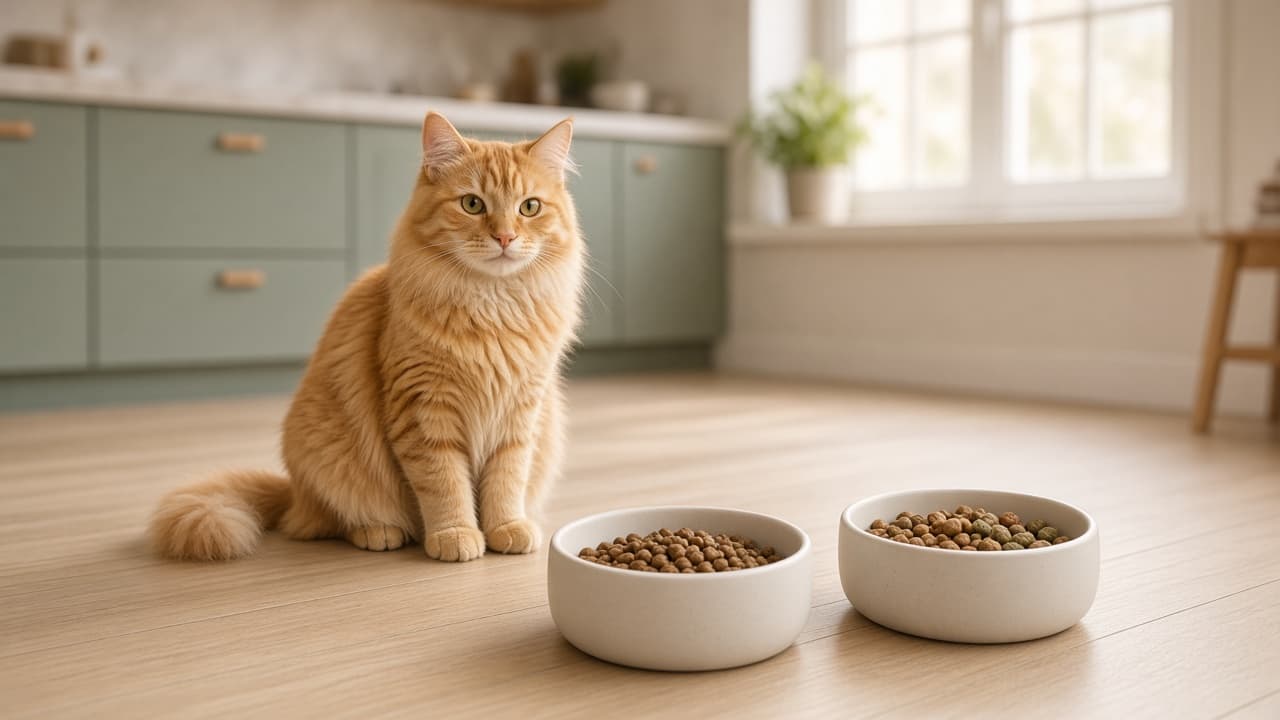
Quick answer
To switch cat food safely, mix the new food into the old one over about 7 to 10 days. Start with roughly 25% new and 75% old for two days, move to half and half, then 75% new, and finally serve only the new food. Keep the total amount the same, watch your cat's appetite and litter box, and slow down if your cat seems unsettled. If your cat vomits repeatedly, has ongoing diarrhoea or stops eating, ask your vet.
Changing your cat's food sounds simple: open a new bag and fill the bowl. But cats are creatures of habit, and a sudden change can mean an upset stomach, a messy litter box or a cat that simply refuses to eat. Whether your kitten is turning one, your usual brand is out of stock, or your vet has suggested a different diet, this guide explains how to switch cat food step by step, with a day-by-day schedule, tips for fussy cats and the warning signs to watch for.
Why switch your cat's food gradually?
A cat's digestive system gets used to the food it eats every day. A new recipe can have different proteins, fat levels, fibre and textures. PetMD, VCA Animal Hospitals and the Animal Medical Center in New York all advise changing food gradually, because a sudden switch can lead to:
- Vomiting
- Diarrhoea or soft stools
- Loss of appetite or refusal to eat
There is also a behavioural side. The American Animal Hospital Association (AAHA) notes that cats can be sensitive to the physical form, smell and taste of foods, and that a cat used to one texture may refuse a different one. A slow change gives your cat time to accept the new taste and texture, not just to digest it.
Common reasons to change cat food
Most cats do best on one good, complete food for long periods. PetMD notes that it is not usually necessary to switch brands regularly unless your vet advises it. Good reasons to change include:
- Life stage. Kittens need a growth food, and PetMD notes that at about one year old most cats are ready to move to an adult formula. Senior cats may benefit from a diet suited to their age.
- Health needs. Your vet may recommend a specific diet for weight management, urinary health, kidney support, sensitive digestion or a suspected food allergy. Always follow your vet's plan for these.
- Availability. If your usual food is hard to find, switching on purpose is far better than a panicked swap when the bag runs out.
- A better fit. You may want to add wet food for extra moisture, or move to a food with a clearer label and a "complete and balanced" statement.
Changing flavours or ranges within the same brand can still mean a different recipe, so it is safest to treat any new food as a switch.
How to switch cat food: a 7 to 10 day schedule
PetMD and VCA describe the same basic plan. The percentages refer to your cat's normal daily amount, so the total should not increase; you are replacing part of the old food, not adding extra on top.
- Days 1 to 2: 75% old food, 25% new food.
- Days 3 to 4: 50% old food, 50% new food.
- Days 5 to 6: 25% old food, 75% new food.
- Day 7 onwards: 100% new food.
If your cat is doing well, you can finish in about a week. If stools become soft or your cat is hesitant, stay at the current stage for a few extra days before moving on. The Animal Medical Center suggests that around 10 days suits most healthy pets.
Step-by-step tips for a smooth switch
- Plan ahead. Buy the new food before the old bag runs out, so you have enough of both for the full transition.
- Check the feeding guide. Read the new pack's feeding guide for your cat's ideal weight. Calorie content varies between foods, so the right amount may be different from what you feed now. Our guide on how much to feed a cat explains how to measure portions.
- Weigh or measure. Use a kitchen scale or the same cup each time, so the mix ratios are accurate.
- Mix well. With dry food, stir the kibbles together so your cat cannot simply pick out the old ones. With wet food, mash the two together on the plate.
- Keep everything else the same. PetMD suggests using a quiet feeding spot that stays the same during the transition. Keep meal times, bowls and the feeding place unchanged.
- Watch and note. Keep an eye on appetite, energy and the litter box each day.
How to switch from kitten food to adult cat food
Kitten food is more energy-dense to support growth. PetMD says most cats are ready for adult food at about one year old, but ask your vet about the right time for your cat, especially for larger or slower-maturing breeds.
Use the same 7 to 10 day schedule. For example, a kitten on Whiskas Junior Ocean Fish could move gradually to an adult dry food such as Whiskas Adult Chicken. Staying within a familiar brand can make the taste change easier for some cats, but it is still a new recipe, so go slowly.
After the switch, recheck the amount. Adult cats need fewer calories per kilogram than growing kittens, and overfeeding at this stage is an easy way for weight to creep up. For more on the kitten stage, see our kitten food guide.
How to switch from dry to wet food (or wet to dry)
Moving between dry and wet food is the trickiest kind of switch, because both the texture and the calories change.
Dry to wet
Wet food is mostly water, so PetMD notes your cat will need a larger volume of wet food to get the same calories as their dry food. Wet food also adds moisture to your cat's diet, which many owners like during hot weather. To make the change:
- Start by offering a small spoonful of wet food, such as Felix Adult Tuna in Jelly, alongside the usual dry meal.
- Increase the wet portion over the following days while reducing the dry food so total calories stay roughly the same.
- Try different textures. Some cats prefer jelly, others gravy or pâté.
If you are deciding how much of each to feed long term, read our guide to wet vs dry cat food, and for hydration tips see how to get your cat to drink more water.
Wet to dry
Dry food is much more calorie-dense, so a cat moving onto dry food will usually need a smaller volume to avoid weight gain. PetMD suggests that if your cat does not like the dry texture at first, you can mix the two so the wet food coats the kibble. Make sure fresh water is always available, because your cat will get much less moisture from food.
Tips for picky cats
Some cats accept a new food in a week. Others take much longer. AAHA notes that cats may need up to 40 days to transition, and that a cat used to one texture may need one to two months to accept a very different one. Be patient and try these ideas:
- Go slower. Use smaller steps, such as 10% new food for several days, and increase only when your cat is eating well.
- Serve it at the right temperature. AAHA notes that cats tend to prefer food near body temperature and do not accept food that is too cold or too hot. Let food from the fridge come up to room temperature, and never serve it hot.
- Add a little flavour. AAHA suggests a small amount of canned food as a topper or a low-salt broth as a flavour enhancer. A cat broth such as Wanpy Meat Broth Chicken can be poured over dry food; it is a complementary product, not a complete meal. If your cat is on a vet diet, ask your vet before adding anything.
- Keep bowls clean. Leftover smells can put cats off. Wash bowls daily and remove uneaten wet food after a few hours.
- Don't wait it out. Never try to "starve" a cat into eating a new food. Cornell Feline Health Center warns that loss of appetite can have a severe impact on an adult cat's health if it lasts as little as 24 hours.
Avoid switching when your cat feels unwell
AAHA explains that a cat that feels nauseous may develop a learned dislike of whatever food it ate at the time, and that this aversion can last a long time. So avoid introducing a new long-term food while your cat is sick, recovering from surgery or stressed, for example after moving house. Wait until your cat is well, and follow your vet's guidance if a diet change is part of treatment.
Signs the switch is not going well
PetMD lists these signs of digestive upset after a food change:
- Vomiting
- Diarrhoea or constipation
- Bloating or gas
- Eating less or refusing food
- Lethargy
- Weight loss
Mildly softer stools for a day or two can happen while the gut adjusts. If you notice mild changes, the Animal Medical Center advises slowing or pausing the transition.
When to call your vet
Ask your vet promptly if your cat:
- Has not eaten for 24 hours. PetMD advises calling your vet right away in this case.
- Vomits repeatedly or has ongoing diarrhoea.
- Seems unusually tired, weak or in pain, or has blood in the stool.
- Is a kitten, an older cat or has a medical condition and is showing any of the signs above.
PetMD also advises against adding supplements or changing to yet another diet on your own when symptoms appear, as this can make things worse. Let your vet guide the next step.
Common mistakes when changing cat food
- Switching overnight. Even a good food can cause an upset if it replaces the old one all at once.
- Adding food instead of replacing it. Mixing in new food on top of the usual amount quietly overfeeds your cat.
- Changing too many things at once. A new food, new bowl and new feeding spot in the same week makes it hard to know what your cat dislikes.
- Rotating brands constantly. Frequent, sudden changes can unsettle digestion. Choose a food that suits your cat and stick with it.
- Forgetting treats. Treats and toppers count toward the daily total. Keep them small during a transition.
The bottom line
The safest way to switch cat food is slowly: mix the new food into the old over 7 to 10 days, keep the total amount the same and keep everything else about mealtimes familiar. Give fussy cats extra time, never let a cat go without eating and don't introduce a new long-term food while your cat is unwell. For any vomiting, diarrhoea, loss of appetite or a vet-recommended diet, ask your vet.