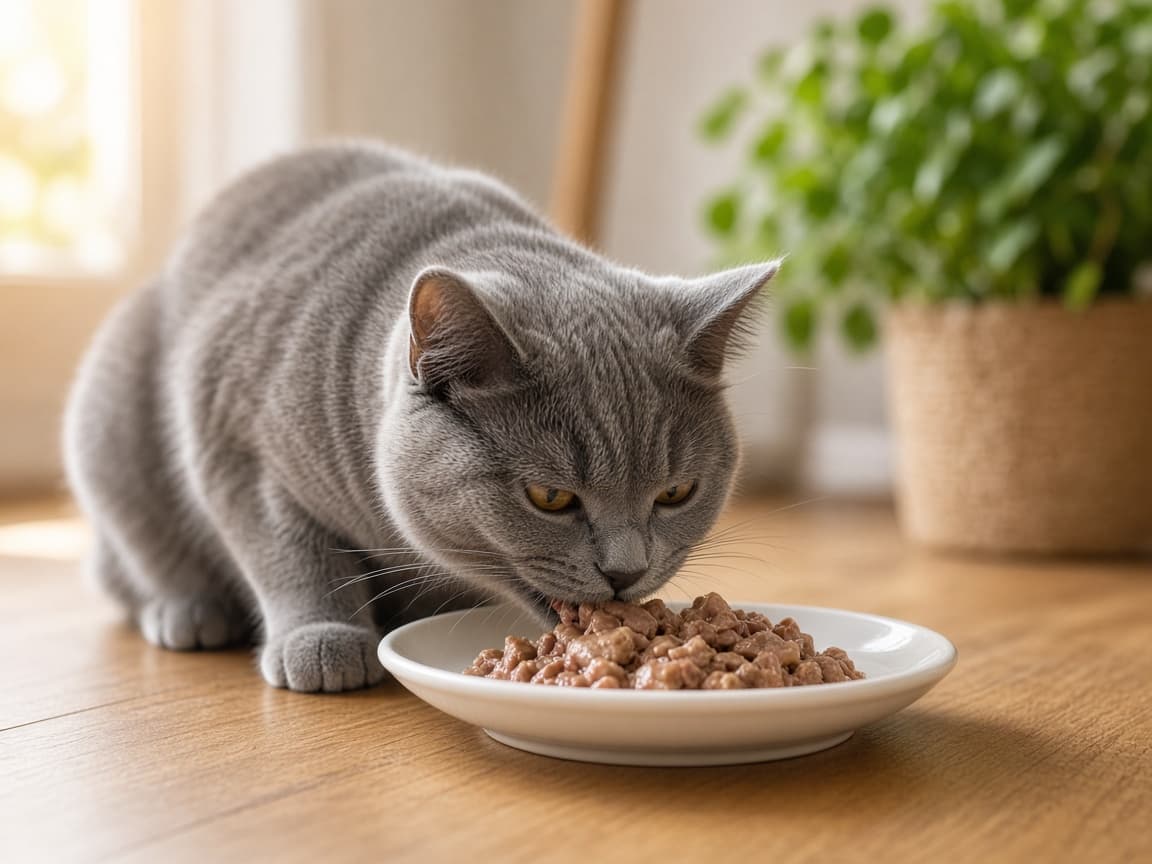
Quick answer
An average adult cat of about 4.5 kg (10 lb) needs roughly 260 to 280 calories a day, according to VCA Animal Hospitals, PetMD and the US National Research Council; smaller or less active cats need less. In practice, start with the feeding guide on your cat's food pack for their ideal weight, split it into at least two measured meals, count treats in the total and check your cat's body shape every few weeks. If your cat is losing or gaining weight, or stops eating, ask your vet.
Written by the aristocatbd team
"How much should I feed my cat?" is one of the most common questions we hear from cat owners in Bangladesh. Pack labels give a guide, but they cannot know whether your cat sleeps all day in a Dhaka flat or roams a rooftop. This guide explains how much to feed a cat per day, how to measure and mix dry and wet food, and how to tell if you have got it right.
Feeding a kitten? Kittens need different amounts and more meals, so read our kitten food guide instead.
How much should a cat eat a day?
The National Research Council's guide Your Cat's Nutritional Needs gives these average daily energy needs for adult cats:
- A lean cat of about 2.3 kg (5 lb): around 170 calories a day.
- A lean cat of about 4.5 kg (10 lb): around 280 calories a day.
- A lean cat of about 6.8 kg (15 lb): around 360 calories a day.
VCA Animal Hospitals gives a similar figure of about 275 calories a day for an average 4.5 kg cat. PetMD explains a common vet formula that gives about 262 calories a day for a neutered 4.5 kg cat at its ideal weight, and notes that individual cats can need up to 20 percent more or less than any formula predicts. So calorie numbers are only a starting point; your cat's body shape tells you whether the amount is right.
What changes how much your cat needs
- Ideal weight, not current weight. Feed for the weight your cat should be, not the weight they are now.
- Activity. VCA notes that outdoor cats may need more calories than less active indoor cats, and many cats in Bangladeshi flats live fully indoors.
- Life stage and health. Kittens, pregnant and nursing cats, older cats and cats with medical conditions have different needs. Ask your vet for a plan.
Start with the feeding guide on the pack
Calorie content varies a lot between foods, so the most practical starting point is the feeding guide printed on your cat's food, read at your cat's ideal weight. A few examples from products in our food and treats aisle show how different the amounts can be:
- Dry food: the feeding guide on our Bonacibo Adult Chicken with Anchovy and Rice page suggests about 40 to 60 g a day for a 2 to 3 kg cat and 60 to 100 g a day for a 3 to 5 kg cat.
- Wet pouches as a full diet: for Felix Adult Tuna in Jelly, Purina suggests 3 to 4 pouches a day for an average 4 kg adult cat, served in at least two meals.
- Other dry foods: for kibble such as Whiskas Adult 1+ Chicken, follow the daily guide printed on the bag and split it across two or more meals.
The ranges are wide, so start in the middle and adjust over the next few weeks based on body shape.
Complete food or complementary food?
Before you count a food as a meal, check the label:
- Complete (or "complete and balanced") foods contain all the nutrients your cat needs and can be fed on their own.
- Complementary foods, such as many toppers, broths and some pouches, are designed to be fed alongside a complete diet. For example, Nekko recommends feeding its pouches alongside other food, and Wanpy describes its meat broth as a supplement to a complete and balanced diet.
Complementary foods still contain calories, so include them in the daily total.
How to measure your cat's food
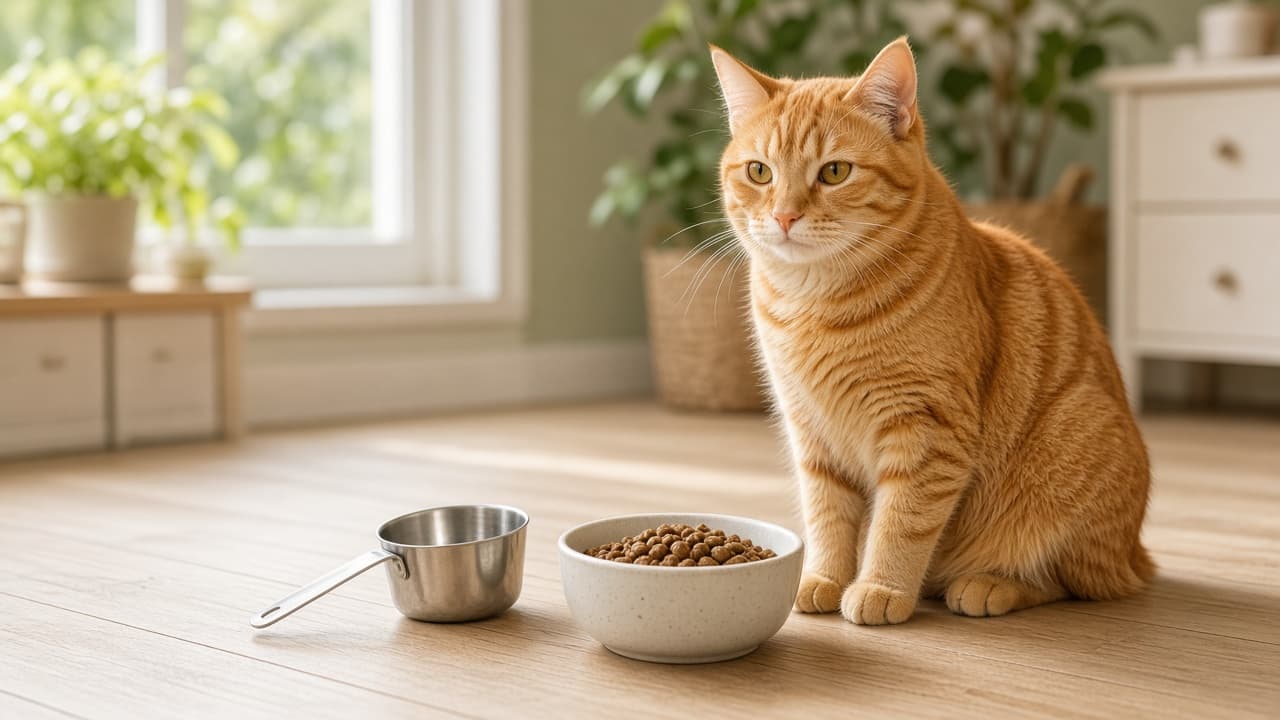
Guessing by eye is how most cats end up overfed. VCA recommends using a measured portion every day, with either a measuring cup or a kitchen scale.
- Use a kitchen scale for dry food. Feeding guides are usually in grams, and a small digital scale is more accurate than a cup.
- Weigh the full day's amount in the morning. Keep it in a lidded container and serve each meal from it. When it is empty, feeding is finished for the day.
- Count wet food by the pouch or can. For cans, divide the contents according to the pack guide.
- Take treats out of the total. Cornell suggests treats should stay within 10 to 15 percent of daily calories, and VCA says 10 percent or less. Our cat treats guide has practical tips.
How often should you feed a cat?
VCA's most common recommendation is at least two meals a day. A cat's stomach empties within a few hours, and after 8 to 10 hours an empty stomach starts to trigger hunger. A simple routine:
- Two meals: morning and evening, about 10 to 12 hours apart, which suits most working households.
- Three or four smaller meals: VCA notes this can help cats that beg between meals or eat only a little at a time.
- Same times every day: VCA says a routine gives cats security and makes later food changes easier.
Is free feeding okay?
Free feeding means leaving food out all day. VCA says it can work for dry food in a single-cat home, but you should still measure the whole day's portion and not top it up. Never leave wet food out for long, because it spoils quickly, especially in Bangladesh's heat and humidity.
For fast or bored eaters, VCA suggests a food puzzle or interactive feeder.
How to mix wet and dry cat food
Many owners give dry food as a base and add a wet pouch as a treat on top of a full portion, and the extra calories add up day after day.
To mix wet and dry food without overfeeding:
- Decide roughly what share of the day each food will cover, for example half wet and half dry.
- Use each pack's feeding guide for your cat's ideal weight and give that share of each amount.
- Using the Felix example above, if a 4 kg cat would eat 3 to 4 pouches a day on wet food alone, giving 2 pouches covers roughly half the day, so give roughly half of the dry food's daily amount alongside it.
- Watch your cat's body shape for a few weeks and adjust.
Some packs also print a mixed-feeding guide. Wet food adds water to your cat's diet as well, which is helpful for cats that drink little. Our guide on how to get your cat to drink more water explains why that matters, and our wet vs dry cat food guide compares the two in more detail.
How to tell if you are feeding the right amount
Cornell Feline Health Center describes a 9-point body condition score, where 5 is ideal. A cat at an ideal score is well proportioned, with:
- Ribs you can feel under a slight covering of fat.
- A visible waist behind the ribs when you look down from above.
- Only a small fat pad on the belly.
Signs your cat may be getting too much or too little:
- Too much: you cannot feel the ribs, there is no waist, or weight creeps up month after month.
- Too little: ribs, spine or hip bones are easy to see, or your cat is losing weight.
Weigh your cat every few weeks: weigh yourself, then weigh yourself holding your cat, and subtract. Make small changes to the daily amount and check again after a few weeks. VCA advises having your vet assess your cat's weight and body condition regularly; they can also teach you to score your cat at home.
Common feeding mistakes
- Refilling whenever the bowl is empty. Many cats will eat whatever is in front of them.
- Treating every meow as hunger. Cats often want attention or play. Try a short play session first.
- Forgetting family "extras". Bits of fish, chicken or rice from the table add calories. Our guide to what human food cats can eat explains which foods are safe and which to avoid.
- Switching foods suddenly. When you change food, mix it with the old food gradually over about 7 to 10 days, as the feeding guides on our product pages suggest.
- Crash dieting. Cornell notes that obesity is the most common nutrition-related problem in cats and makes them more susceptible to problems such as arthritis and diabetes. Never put an overweight cat on a sudden or strict diet; ask your vet for a slow, supervised plan.
When to talk to your vet
Ask your vet promptly if your cat:
- Stops eating or eats much less than usual. Cornell warns that a cat that refuses to eat can develop serious medical problems, and any cat that refuses food and loses weight should be examined by a vet.
- Loses weight without a clear reason, even while eating normally.
- Suddenly becomes much hungrier or thirstier than usual.
- Is overweight, pregnant, nursing, elderly or has a medical condition.
The bottom line
An average adult cat needs a few hundred calories a day, but the right amount is whatever keeps your cat at a healthy, lean body shape. Start with the feeding guide on the pack for your cat's ideal weight, weigh the food, split it into at least two meals, count treats and extras and check body shape every few weeks. For anything to do with weight loss, poor appetite or illness, ask your vet.